Aloe Vera Gel for Skin: Benefits, Uses and the Curaçao Farm Story
Aloe Vera gel for skin is best known for its cool, lightweight feel, but its appeal goes beyond the familiar after-sun routine. At our Aloe Vera farm in Curaçao, we grow, harvest and process the plant while teaching visitors how the clear inner-leaf gel can support a simple skincare routine.
So, what does Aloe Vera do for skin? It can help skin feel hydrated, soothed and comfortable. The benefits depend on how the leaf is processed, the complete product formula and your individual skin. Aloe Vera should not be presented as a cure for a skin condition, but it can be a useful supporting ingredient in everyday care.
Quick answer: The main Aloe Vera benefits for skin are lightweight hydration and a soothing, cooling feel. A moisturizer containing Aloe Vera may also help ease the discomfort of mild sunburn. It does not replace sunscreen, medical care or prescribed treatment.
What does Aloe Vera do for skin?
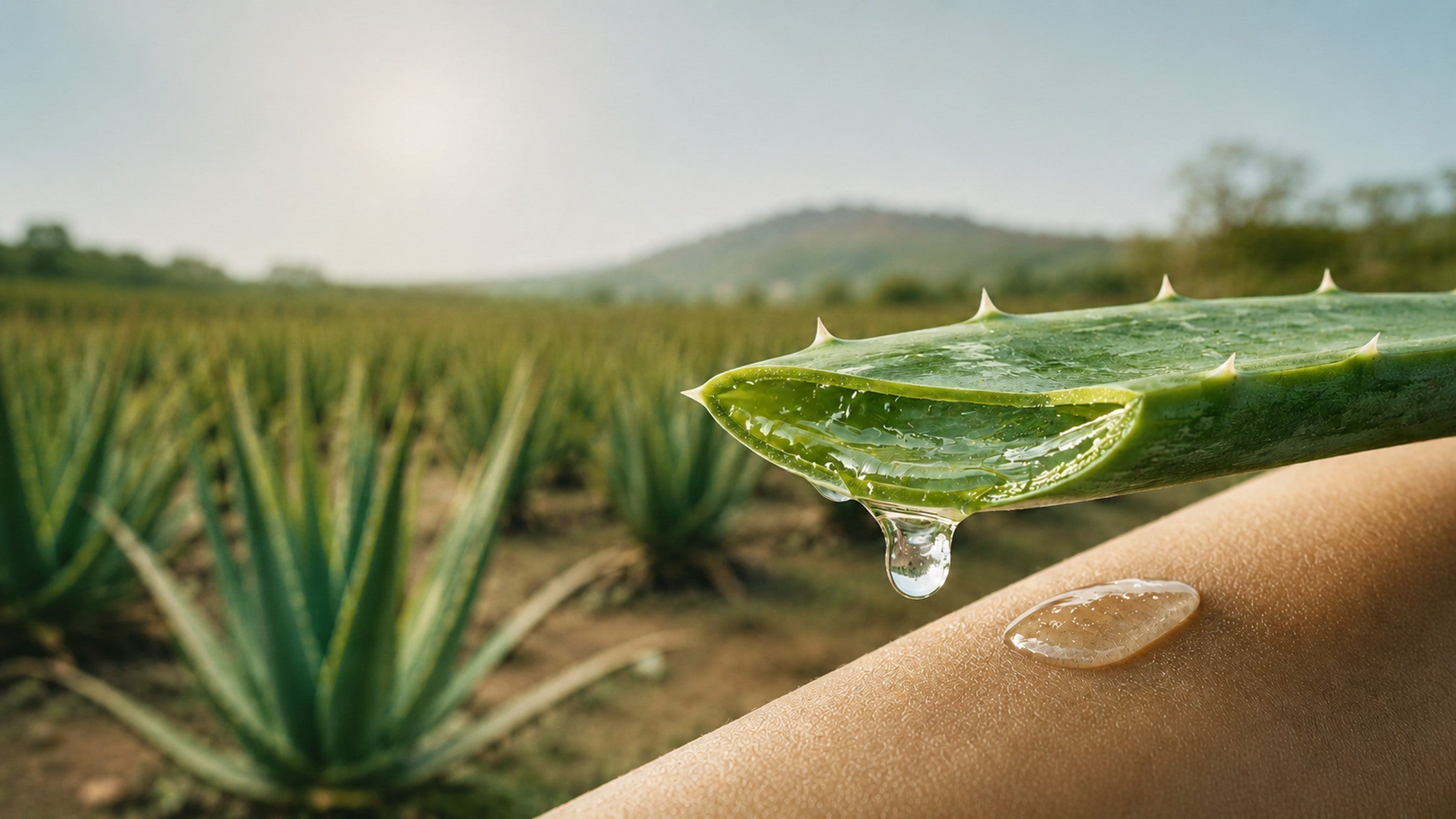
The clear gel inside an Aloe Vera leaf is water-rich and contains naturally occurring polysaccharides. In a well-made topical formula, these characteristics can help support moisture and give the skin a fresh, calming feel without the heaviness of a rich cream.
The US National Center for Complementary and Integrative Health notes that topical Aloe Vera gel is generally well tolerated. Reactions such as burning, itching or a rash can still occur, which is why a patch test is sensible when trying a new product.
Five practical Aloe Vera benefits for skin
1. Lightweight hydration for dry skin
Aloe Vera gel for dry skin can add water-based hydration without leaving a heavy or greasy layer. Apply a thin layer to clean, slightly damp skin. If your skin is very dry, follow with a moisturizer to help reduce moisture loss.
2. Cooling comfort after sun exposure
Aloe Vera is often associated with after-sun care because the gel feels cool and soothing. The American Academy of Dermatology recommends a moisturizer containing Aloe Vera or soy to help soothe sunburned skin. Aloe Vera does not block ultraviolet radiation, so it is not a substitute for broad-spectrum sunscreen, shade or protective clothing.
3. A calming step for irritated-looking skin
Wind, dry weather, shaving and friction can leave intact skin feeling tight or uncomfortable. A simple Aloe Vera gel may provide a calming layer. Avoid applying cosmetic gel to deep cuts, infected skin or serious burns, and seek professional care when symptoms are severe or persistent.
4. Hydration without a heavy feel
People with oily or combination skin often want hydration without a rich finish. Aloe Vera gel for oily skin can feel light and refreshing. Whether a product is suitable for acne-prone skin depends on the full ingredient list, however, not on Aloe Vera alone.
5. Support for post-shave and body care
A thin layer of Aloe Vera gel can feel comfortable after shaving or after time outdoors. Use it only on intact skin and choose a formula that suits your skin's sensitivity. Fragrance, alcohol and other added ingredients may matter as much as the Aloe itself.
Is Aloe Vera good for every skin type?
Aloe Vera can suit many routines, but the best method depends on your skin type and the formulation you choose.
- Dry skin: Use Aloe Vera gel as a hydrating layer, then apply a moisturizer if more comfort is needed.
- Oily or combination skin: Choose a lightweight formula and check the complete ingredient list for ingredients that may feel too rich.
- Sensitive skin: Select a simple formula, patch test first, and stop using it if you notice stinging, itching, or a rash.
- Sun-exposed skin: Use Aloe Vera for soothing comfort only after exposure; rely on sunscreen and protective measures for prevention.
How to use Aloe Vera gel for skin safely
- Choose a properly prepared product. The clear inner-leaf gel must be separated from the outer rind and yellow latex layer. A formulated product offers more predictable hygiene, stability and application than gel scooped directly from a leaf.
- Patch test first. Apply a small amount to an inconspicuous area and wait before using it more widely, especially if your skin is reactive.
- Apply a thin layer. Use clean hands and spread the gel over clean, intact skin. A large amount is not necessarily more effective.
- Adjust for your skin type. Use a moisturizer over the gel if dry skin still feels tight. If your skin is oily, a light gel may be enough during warm or humid weather.
- Stop if irritation develops. Wash the product off and discontinue use if you experience persistent burning, itching, swelling or a rash.
From Aloe Vera plant to skin: why processing matters
An Aloe Vera leaf has several distinct layers. The clear inner gel used in skincare is different from the yellow latex found closer to the rind. Careful separation, handling and formulation are therefore important parts of creating a consistent Aloe Vera ingredient.
At Curaloe Farm, the journey begins in our Aloe fields in Curaçao. Leaves are cultivated, harvested and processed on-site, creating a short and traceable path from plant to factory. This farm-based perspective is what makes our story different: visitors can see where the plants grow and learn how the inner gel is handled before it becomes part of a finished formula.
Aloe Vera grown at our farm in Curaçao
Curaçao's warm, dry climate is closely connected to the character of our Aloe Vera farm. During a visit, guests can walk through the fields, learn about cultivation and harvesting, and see how leaves move from the farm into the factory. The experience brings the familiar skincare ingredient back to its source: a living plant that must be grown and processed with care.
For a closer look at the growing process, read our step-by-step guide to cultivating Aloe Vera.
Visit the Curaloe Aloe Vera Farm
Reading about Aloe Vera skin benefits is useful; seeing the plant and process in person makes the story tangible. Our guided farm and factory experience takes visitors through the Aloe fields and behind the scenes of on-site processing.
Planning your time in Curaçao? Book the Curaloe Aloe Vera Farm & Factory Tour and discover the journey from plant to bottle.
Frequently asked questions
What is Aloe Vera used for in skincare?
Aloe Vera is commonly used in gels, moisturizers and after-sun products to provide lightweight hydration and a soothing feel. The effect of any product depends on its complete formulation.
Is Aloe Vera good for dry skin?
It can be a helpful hydrating layer. Very dry skin may also need a moisturizer containing ingredients that reduce moisture loss.
Can Aloe Vera gel be used on oily skin?
Yes, many people like its lightweight texture. Check the complete formula and introduce it gradually if your skin is acne-prone or sensitive.
Can Aloe Vera treat acne, eczema or psoriasis?
Aloe Vera may feel soothing, but it should not be described as a cure or a replacement for medical treatment. Ask a qualified healthcare professional about persistent, painful or worsening skin concerns.
Can I apply fresh Aloe Vera directly from the plant?
The inner gel must be separated carefully from the rind and yellow latex, and fresh plant material is not a standardized cosmetic formula. For routine skincare, a properly prepared product provides more predictable hygiene, stability and use.
Does Aloe Vera protect skin from the sun?
No. Aloe Vera may help soothe skin after sun exposure, but it does not replace a broad-spectrum, water-resistant sunscreen, protective clothing or shade.
Health note: This article provides general educational information and is not medical advice. Do not use cosmetic Aloe Vera gel on serious burns, deep or infected wounds, or severe skin reactions. Seek professional care when needed.