Why Aloe Vera Is Called the “Miracle Plant”
Few plants have earned as many admiring names as Aloe Vera. It is often described as the “miracle plant,” “wonder plant” or “plant of immortality.” These names reflect its remarkable resilience, its distinctive gel-filled leaves and its long association with skincare and traditional wellness practices.
The phrase is not a scientific classification, and Aloe Vera is not a cure-all. Its reputation comes from a more interesting combination of qualities: it can thrive in dry conditions, store water inside its leaves and provide a clear inner-leaf gel used in many types of products. Understanding the real Aloe Vera plant benefits makes the plant more impressive—not less.
Quick answer: Aloe Vera is called the miracle plant because it combines natural resilience with an unusually versatile inner-leaf gel. The gel is widely used in skincare, cosmetics and some drinkable products, while scientific research continues to examine specific topical and oral uses. “Miracle plant” is a cultural nickname, not a medical promise.
What exactly is the Aloe Vera plant?
Aloe Vera is a succulent perennial adapted to dry environments. The accepted botanical name is Aloe vera (L.) Burm.f. The name Aloe barbadensis Mill.—often written commercially as Aloe Barbadensis Miller—is treated as a synonym by the Royal Botanic Gardens, Kew.
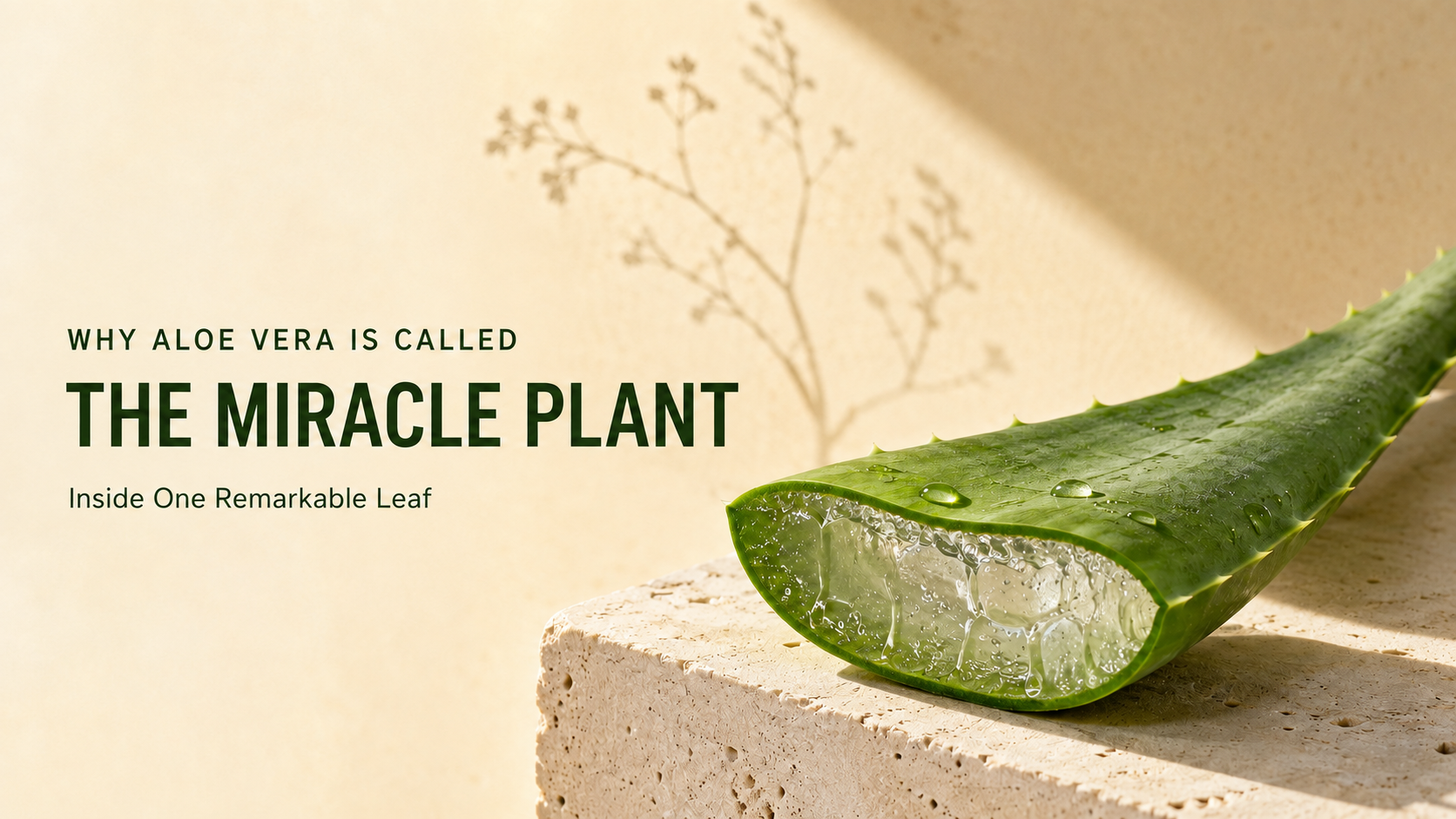
Its thick, tapering leaves grow in a rosette and contain several very different layers:
- The green outer rind provides structure and protection.
- The yellow latex layer sits beneath the rind and naturally contains anthraquinones such as aloin.
- The clear inner leaf contains the water-rich material commonly called Aloe gel.
That inner gel is the part most people associate with Aloe Vera skincare. The latex is chemically different and can have a strong laxative effect when swallowed. Keeping these layers separate is essential when Aloe is processed for cosmetic or oral use.
Six reasons Aloe Vera earned its “miracle plant” reputation
1. It stores water inside its leaves
One of the clearest advantages of the Aloe Vera plant is its ability to conserve water. Its fleshy leaves act as natural reservoirs, helping the plant withstand warm, dry conditions that would challenge many softer-leaved species.
This does not mean Aloe requires no care, but it explains why the plant is so closely associated with sunny and arid landscapes. Curaçao's climate makes the connection immediately visible: a plant built to manage limited moisture growing beneath strong Caribbean sunlight.
2. One leaf contains distinctly different materials
Cutting an Aloe leaf reveals more complexity than its simple exterior suggests. The protective rind, bitter latex and translucent inner leaf each have different characteristics. This layered structure is one reason processing matters so much.
Freshness alone does not guarantee quality. The intended use, the part of the leaf selected, hygiene, stabilization, preservation and complete product formula all influence the finished product.
3. The inner gel has a naturally cool, water-rich feel
The clear inner-leaf material is mostly water and has a light gel texture. When used in a suitable skincare formula, it can help skin feel hydrated, cooled and comfortable without the heaviness of richer butters or oils.
This is the most relevant area for the keyword `aloe vera plant benefits for skin`. The benefit should still be described accurately: Aloe can support hydration and a soothing skin feel, but it should not be presented as a universal treatment for burns, acne, eczema or other medical conditions.
The National Center for Complementary and Integrative Health reports that topical Aloe is generally well tolerated and that some clinical research suggests possible benefits for burn healing and pain. Evidence varies by preparation and condition, so serious burns or persistent skin problems require professional care.
4. It can be used in many product formats
When people ask, “What is Aloe Vera good for?”, the answer depends on the formulation. Aloe may appear in:
- lightweight facial and body gels;
- moisturising creams and lotions;
- cleansers, toners and masks;
- after-sun and post-shave products;
- shampoos and body washes; and
- professionally prepared liquid supplements.
The presence of Aloe does not make all these products interchangeable. A facial cream combines Aloe with emollients and other ingredients. A cleanser is designed to be rinsed away. A drinkable product must be manufactured specifically for oral use. The full formula—not the plant name alone—determines how a product should be used.
5. People have valued it for generations
Aloe Vera has been cultivated and used for centuries, and its clear inner leaf has become part of traditional practices in many regions. That long history helped create the miracle-plant reputation, but traditional use and modern clinical evidence are not the same thing.
Historical stories show why people were interested in the plant. Scientific research helps determine which specific uses are supported, which remain uncertain and what safety precautions are needed. A separate article in this series will explore Aloe Vera's history in greater depth.
6. It connects a living plant with an everyday product
Many cosmetic ingredients are difficult to picture in their original form. Aloe Vera is different. Visitors can recognize the leaf in the field, see the inner material and then find Aloe listed in familiar products.
At Curaloe Farm, that relationship becomes tangible. The plant is cultivated, harvested and processed as part of a plant-to-bottle approach. Guests can explore the fields and learn how the leaf moves from a living crop into skincare and liquid supplements.
What are the most relevant Aloe Vera plant benefits?
The best-supported answer is narrower than many online lists suggest:
A resilient crop for dry conditions
Aloe Vera is naturally suited to warm, well-drained environments. Its water-storing leaves allow it to tolerate periods of dryness, although responsible cultivation still requires attention to soil, irrigation, pests and harvesting.
For a more detailed look at cultivation, read our step-by-step guide to growing Aloe Vera.
A useful cosmetic ingredient
In properly formulated skincare, Aloe Vera can provide a lightweight, water-rich base and contribute to a cooling, soothing feel. Other ingredients in the formulation determine how well the product moisturises, cleanses or conditions the skin.
Our guide to Aloe Vera gel benefits for skin explains this topic in more detail without treating Aloe as a cure.
A versatile raw material
The clear inner leaf can be incorporated into multiple product categories. This versatility is commercially important, but every intended use requires suitable processing, preservation, testing and labeling.
An educational plant visitors can experience directly
Aloe Vera makes botanical education accessible. Its leaf structure, gel and dry-climate adaptations can be seen rather than discussed only in theory. This makes the plant especially suited to a farm-and-factory visitor experience.
Is Aloe Vera really a medicinal plant?
Aloe Vera has a long history as a medicinal plant, and researchers continue to study its components. However, calling a plant “medicinal” does not mean every traditional claim is proven or that a homemade preparation is automatically safe.
Modern evidence is specific. Research may examine one Aloe preparation, concentration, route of use and condition. Findings for a standardized topical gel cannot automatically be applied to a whole-leaf drink, cosmetic cream or fresh leaf from a garden.
The most responsible approach is to distinguish among:
- traditional use, which explains historical and cultural importance;
- cosmetic benefits, such as helping skin feel hydrated or soothed;
- preliminary research, which requires more evidence; and
- medical treatment claims, which should not be made without appropriate clinical evidence and authorization.
Can you use Aloe directly from the plant?
Fresh Aloe is sometimes applied at home, but it is not identical to a formulated product. The leaf surface may carry dirt or microorganisms, the yellow latex can contaminate the inner material and individual skin responses vary.
If you choose to try a small amount of fresh inner gel on intact skin:
- Use a clean leaf and clean tools.
- Avoid the yellow latex layer.
- Patch test a small area first.
- Stop if burning, persistent redness, itching or swelling develops.
- Do not use it as a substitute for treatment of a serious burn, wound, infection or skin condition.
Do not blend or consume a whole Aloe leaf at home. Oral Aloe products require appropriate separation and processing because Aloe latex can cause abdominal pain, cramping and diarrhoea.
See the “miracle plant” for yourself
The best way to understand Aloe Vera is to see beyond the finished bottle. During the Curaloe Farm & Factory Tour, visitors can walk among the plants, learn about cultivation and harvesting, and discover how Aloe is processed for different products.
The experience turns an often-repeated nickname into something concrete: a resilient plant, a carefully handled leaf and a production process that connects agriculture with skincare and wellness.
Book the Curaloe Farm & Factory Tour
Frequently asked questions
Why is Aloe Vera called the miracle plant?
The nickname reflects Aloe Vera's resilience, water-storing leaves, versatile inner gel and long history of traditional use. It is an affectionate cultural description rather than a scientific or medical classification.
What is Aloe Vera good for?
Aloe Vera is widely used in skincare, cosmetics and professionally prepared liquid supplements. In skincare, it can contribute to hydration and a cooling, soothing feel. Benefits depend on the product formulation and intended use.
Is Aloe Vera the same as Aloe Barbadensis Miller?
Yes. Kew recognizes Aloe barbadensis Mill. as a synonym of the accepted botanical name Aloe vera (L.) Burm.f. “Aloe Barbadensis Miller” remains common in product and commercial language.
Are all Aloe plants suitable for skincare or drinking?
No. Aloe species and plant parts differ. Products should identify the species, the part used and the intended route of use. Never assume that an unidentified ornamental Aloe is suitable for the skin or for consumption.
Does Aloe Vera heal the skin?
Some research suggests specific topical Aloe preparations may support burn healing, but evidence varies. Aloe is better described as a supportive skincare ingredient than a universal healer. Seek medical care for serious burns, wounds, infections or persistent skin conditions.
Where can I see Aloe Vera growing in Curaçao?
Visitors can explore Aloe Vera cultivation and processing at Curaloe Farm in Willemstad. The Farm & Factory Tour provides a guided look at the fields, harvesting and plant-to-bottle process.
A remarkable plant—without the miracle claims
Aloe Vera does not need exaggerated promises to be fascinating. Its ability to store water, its layered leaf structure, its versatile inner gel and its connection to centuries of human use explain why the miracle-plant name has lasted.
The most accurate way to celebrate Aloe is to respect both its potential and its limits: choose the right plant material, use products as directed and separate evidence-based benefits from folklore. That balanced story is at the heart of what visitors discover at Curaloe Farm.
Information notice: This article provides general educational information and is not medical advice. Aloe Vera products are not intended to diagnose, treat, cure or prevent disease. Seek professional advice for medical symptoms, medication interactions, pregnancy, breastfeeding or oral supplement use.